
The Use of Language in Diabetes Care and Education

Authors: Dickinson JK, Guzman SJ, Maryniuk MD, O’Brian CA, Kadohiro JK, Jackson RA, D’Hondt N, Montgomery B, Close KL, Funnell MM.

Abstract

Language is powerful and can have a strong impact on perceptions as well as behavior. A task force, consisting of representatives from the American Association of Diabetes Educators (AADE) and the American Diabetes Association (ADA), convened to discuss language in diabetes care and education. This document represents the expert opinion of the task force. The literature supports the need for a language movement in diabetes care and education. There are effective ways of communicating about diabetes. This article provides recommendations for language used by health care professionals and others when discussing diabetes through spoken or written words-whether directed to people with diabetes, colleagues, or the general public, as well as research questions related to language and diabetes.

Source: https://pubmed.ncbi.nlm.nih.gov/29042412/

Share the Post:

BDI Monthly Events

September 9
September 9Case Consultation
September 9: BDI hosts the San Diego-wide, monthly case consultation meeting (for mental health professionals working in the field of diabetes). Contact us at info@behavioraldiabetes.org if you are in the greater San Diego area and would like further information about this program.
October 16
October 16Diabetes Data Workshop
BDI friends and fellow healthcare professionals, Adam Brown and Aimeé José, present an in-person half-day workshop for people with diabetes here in San Diego, How to Make Diabetes Data Your Friend. Don’t miss it!
October 24
October 24CME Workshop
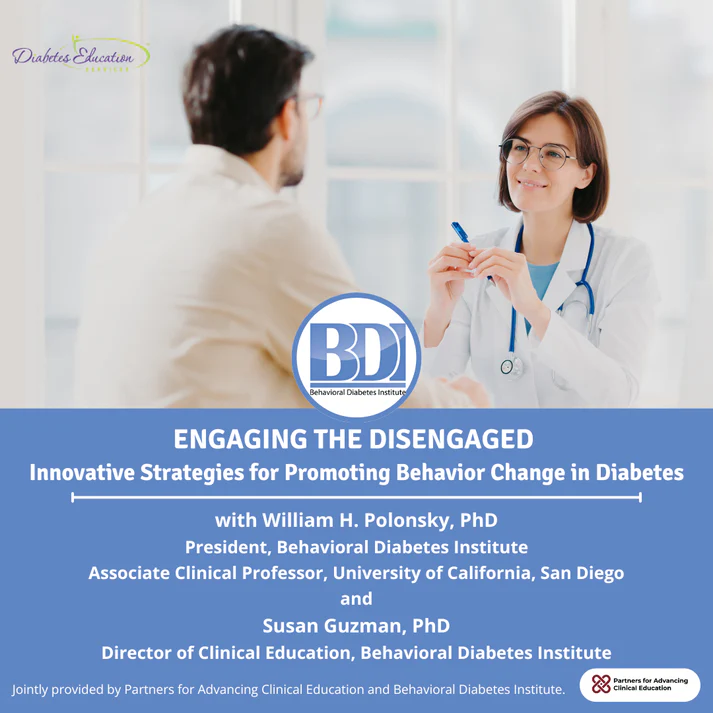
On October 24, BDI will host a live, one-day, CME workshop: Engaging the Disengaged: Innovative Strategies for Promoting Behavior Change in Diabetes. Run by Dr. Polonsky (BDI President) and Dr. Guzman (BDI Clinic Director), Participants will deepen their skills in recognizing and addressing common barriers to effective self-care and cardiometabolic medication initiation and maintenance, while fostering respectful, stigma-free clinical encounters.